Seoul Station Guide: KTX, AREX and Subway Transfers
Information reviewed: 11 October 2026. Check fares, schedules and seat availability for your travel date and confirm the issued ticket.
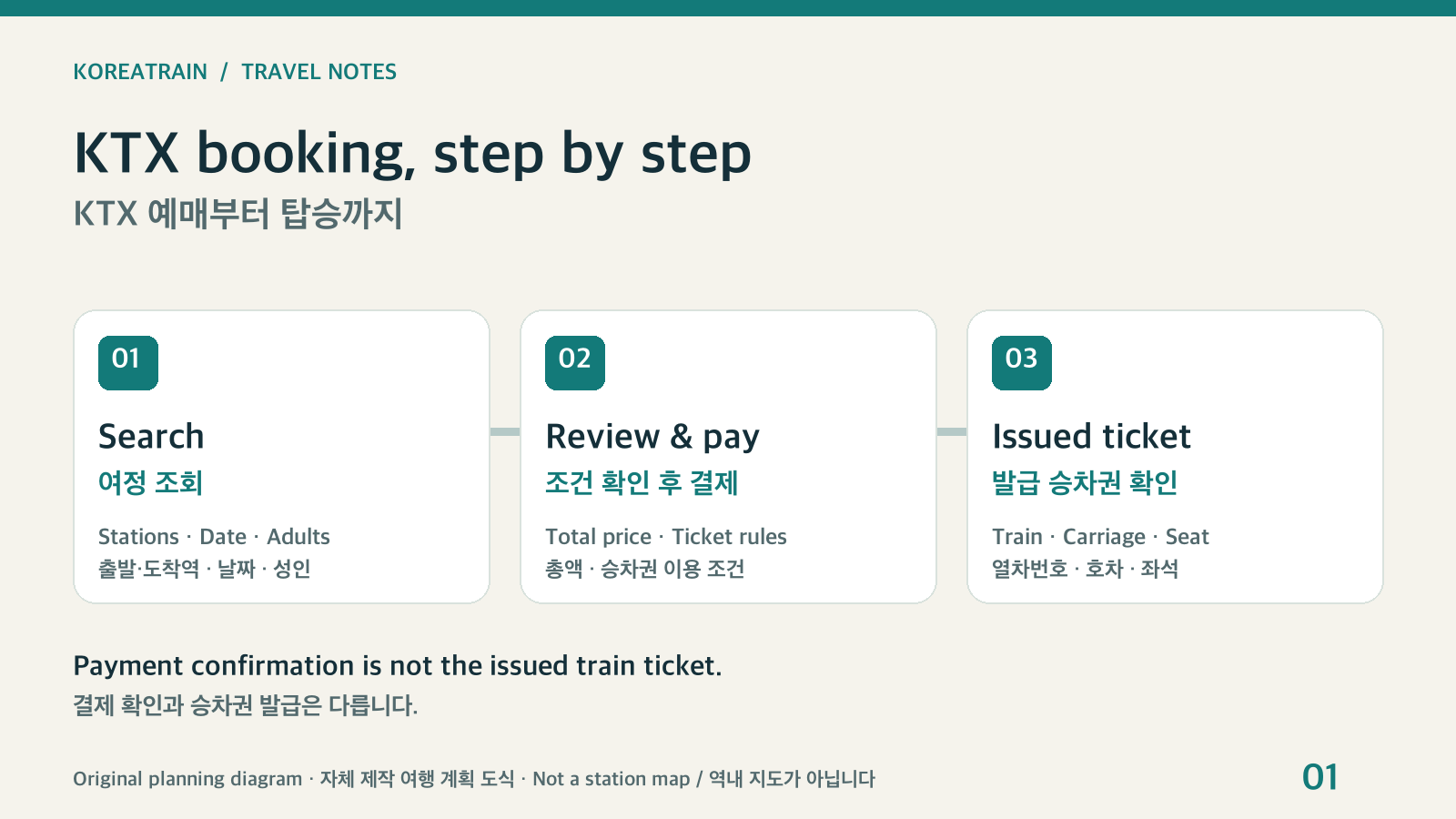
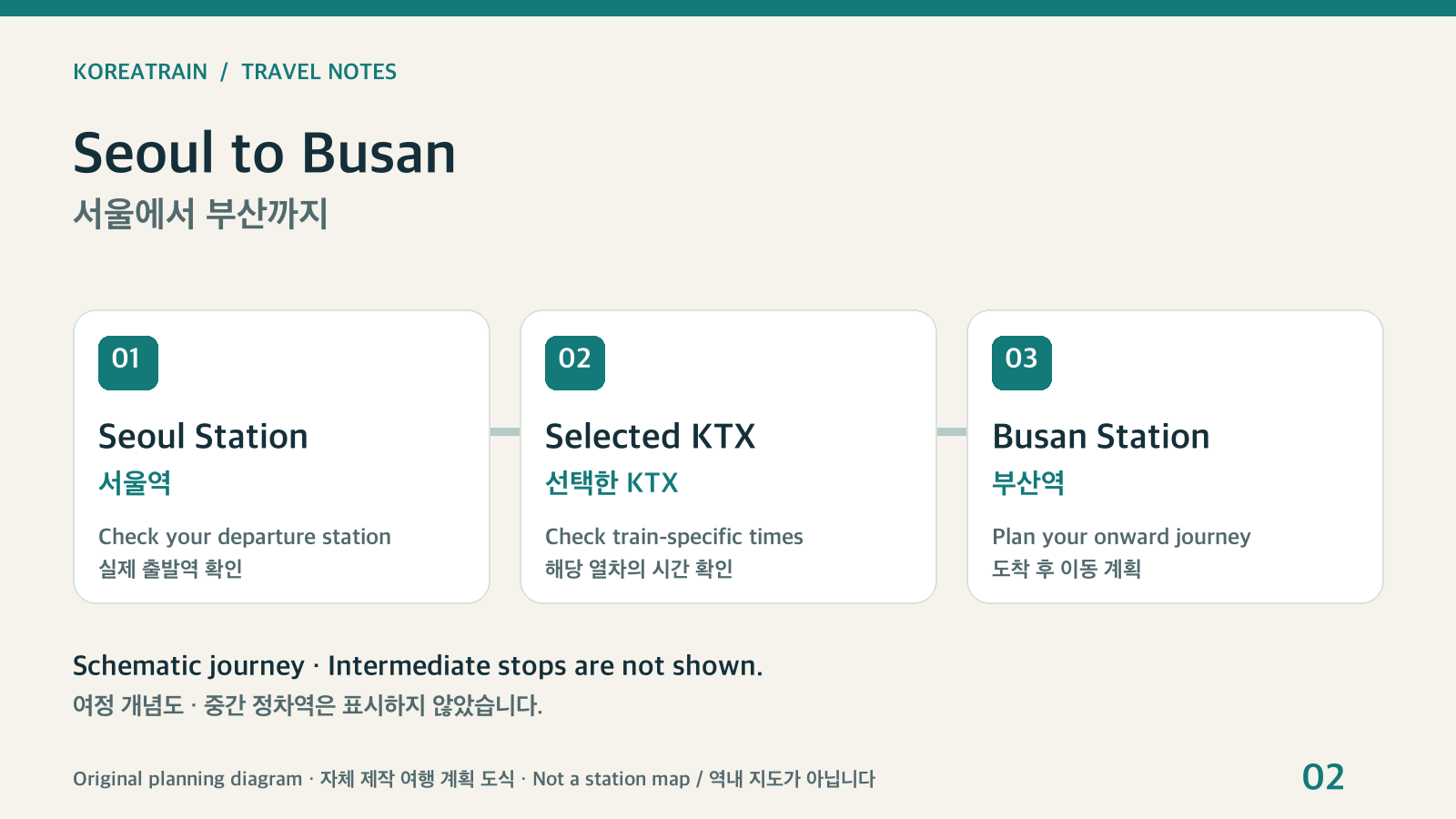
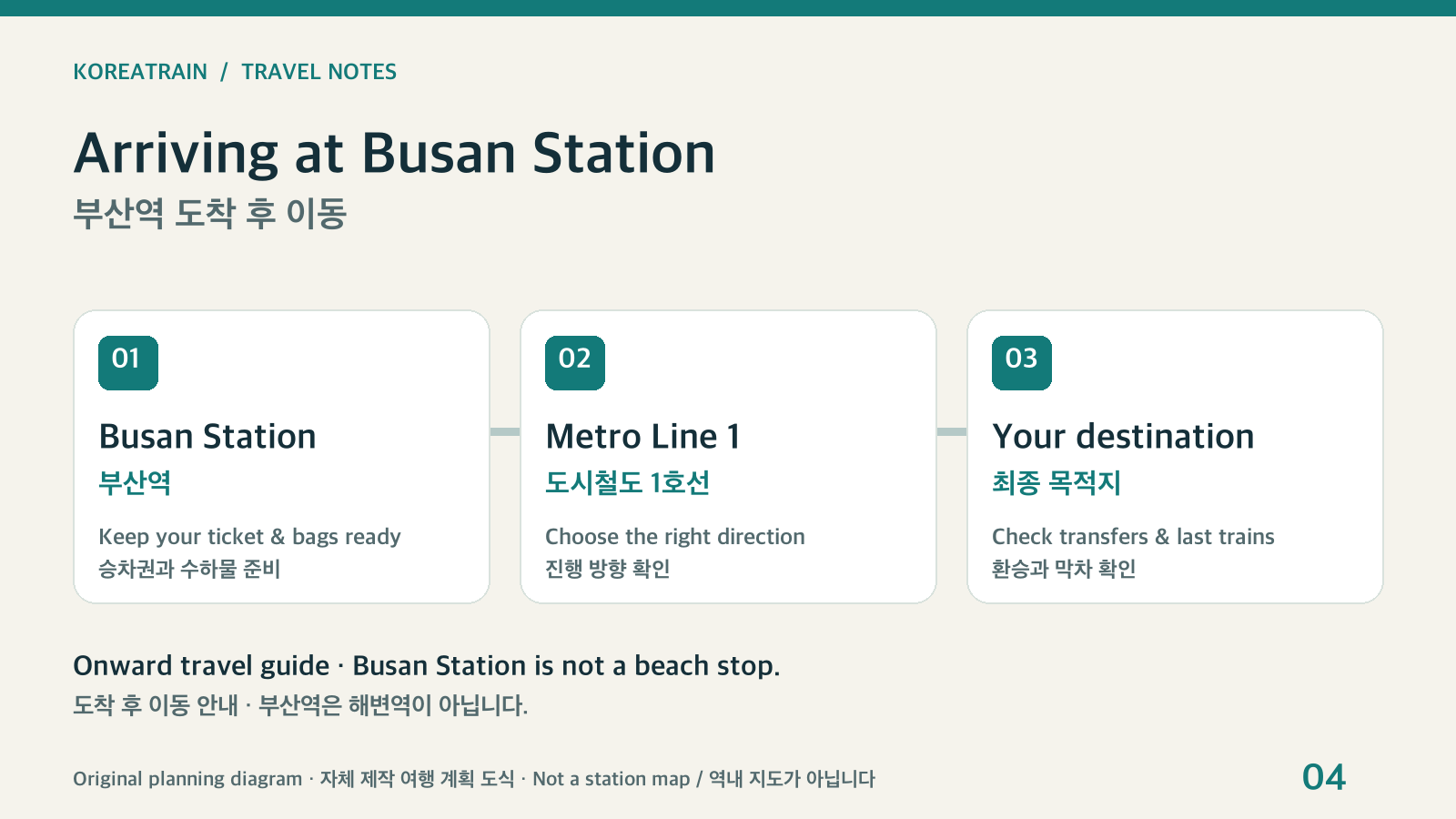
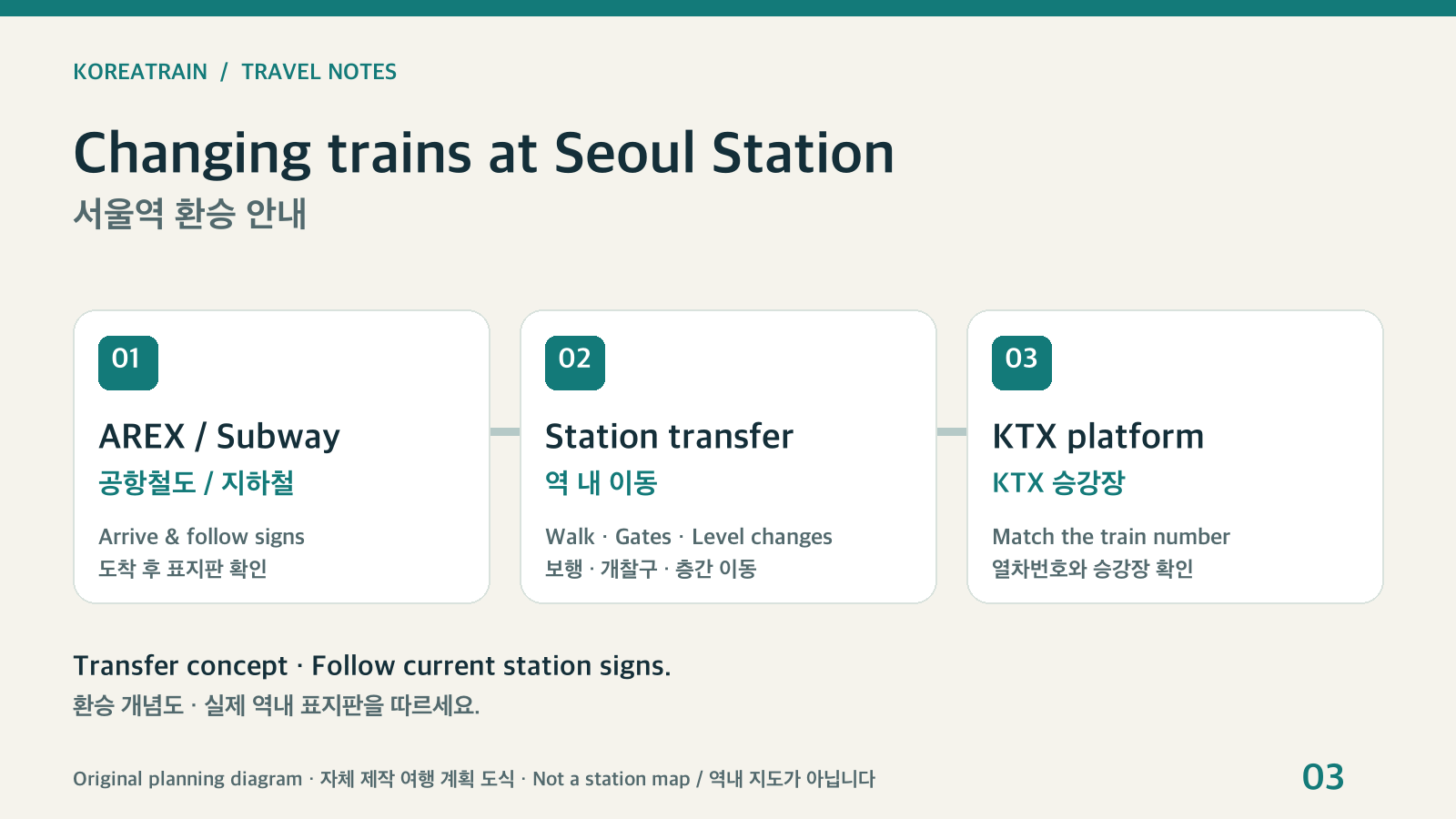
The cover is an original planning diagram for this guide, not a photograph or a station floor plan.
Three checks for a Seoul Station transfer
| Item | What to check |
|---|---|
| Before arrival | Confirm that the next ticket says Seoul Station, not Yongsan, Cheongnyangni or Suseo. |
| Inside the station | Follow the signs for the next service; AREX, subway and intercity boarding areas differ. |
| Before boarding | Match the train number and departure time, then the carriage and seat. |
AREX to KTX: allow for a real transfer
AREX’s official Seoul Station diagram shows multiple underground levels and separate express and all-stop ticketing areas. Use it for orientation, then follow current signs and staff guidance. Allow time to exit the arriving service, change levels, find the intercity departure board and reach your carriage. There is no single safe connection time for every traveller.
Avoid changing the wrong station
An itinerary that changes from Seoul Station to Yongsan, Cheongnyangni or Suseo is a journey across the city, not a platform change. Add a separate local-transport leg before selecting the onward train. If your airport arrival is uncertain, review the flexibility of the onward ticket instead of assuming a missed connection is protected.
Seoul Station is a major interchange for intercity trains, the airport railroad and urban rail. Connections share a station name, but they do not all use the same platform or boarding area. Treat a transfer as a separate part of your itinerary.
Check which station your train uses
Read the departure station on the ticket before travelling. Seoul Station, Yongsan and Cheongnyangni are separate rail terminals; Suseo is another distinct station. A trip described as leaving “Seoul” may require one of these other stations. Use the exact station name in your map app.
Arrive from the subway or airport railroad
Follow signs for your next service after leaving the arriving train. Seoul Station is served by Subway Lines 1 and 4, the Gyeongui-Jungang Line and AREX, according to the Korea Tourism Organization’s rail guide. Allow for walking, gates and possible level changes rather than assuming a same-platform connection.
Find the KTX boarding platform
In the intercity departure area, match your issued ticket’s train number, date and departure time to the display. Check the destination and current platform. Follow the carriage information on the platform and the seat assignment on your ticket. Ask station staff if an announcement or display is unclear.
Plan around luggage and accessibility
Keep luggage manageable for walking and use lifts where suitable. Check current lift routes or assistance arrangements with the station or operator when accessibility is essential. Storage availability, opening hours and prices can change, so do not build a tight connection around finding an empty locker.
Leave room for a delayed connection
Airport arrival procedures, subway delays and unfamiliar walking routes can all affect your transfer. Check the conditions of a separately booked onward train and avoid assuming it will wait for your arriving service. If you are running late, contact your ticket seller or station staff promptly.
Related planning guides
- Incheon Airport to Seoul by Train: AREX and Transfers
- KTX Tickets in Korea: Booking and Boarding Guide
- Seoul to Busan by KTX: Trains, Tickets and Stations
Sources and current information
- Korea Tourism Organization: rail network and principal stations
- Incheon International Airport: Airport Railroad Guide
- AREX: Seoul Station diagram (follow current signs)
Reviewed on 11 October 2026. Dated operator notices take precedence over older general travel summaries. Recheck fares, timetables and pass conditions before purchase.